

Carters Lake CBC circle
The ninth annual Carters Lake Christmas Bird Count was conducted on January 2nd, 2016.Forty-three volunteer birders traveled a combined 637.8 miles and reported a total of 27,674
individual birds. Not only did we cover more miles than ever before, we set a record with
the number of teams that were in the field. This resulted in the most party
hours ever recorded, 106.5. It was a very interesting year in that the circle had
experienced two major weather events within weeks leading up to the count.
The pre-Christmas heat wave that engulfed the midwest and eastern United States set
record high temperatures in December. The unseasonably warm weather carried on
throughout much of the month and not until New Year's Day did the temperatures suggest
that it was truly winter in north Georgia. Obviously the birds, much like most wildlife do, have
to acclimate to their surroundings. All bird surveyors did notice decreased activity in their
sections this year. It seemed possible that these abrupt cooler temperatures had the reverse affect on many common species in that some areas had little bird movement rather than the foraging frenzies that often occur after a cold front moves in. Of course, this is only an
assumption. There's always the possibility that the barometric pressure may have had an
impact on the actions of some species.
The southeast also experienced a considerable amount of rainfall during December. This
month actually was the second wettest December on record in much of Georgia.
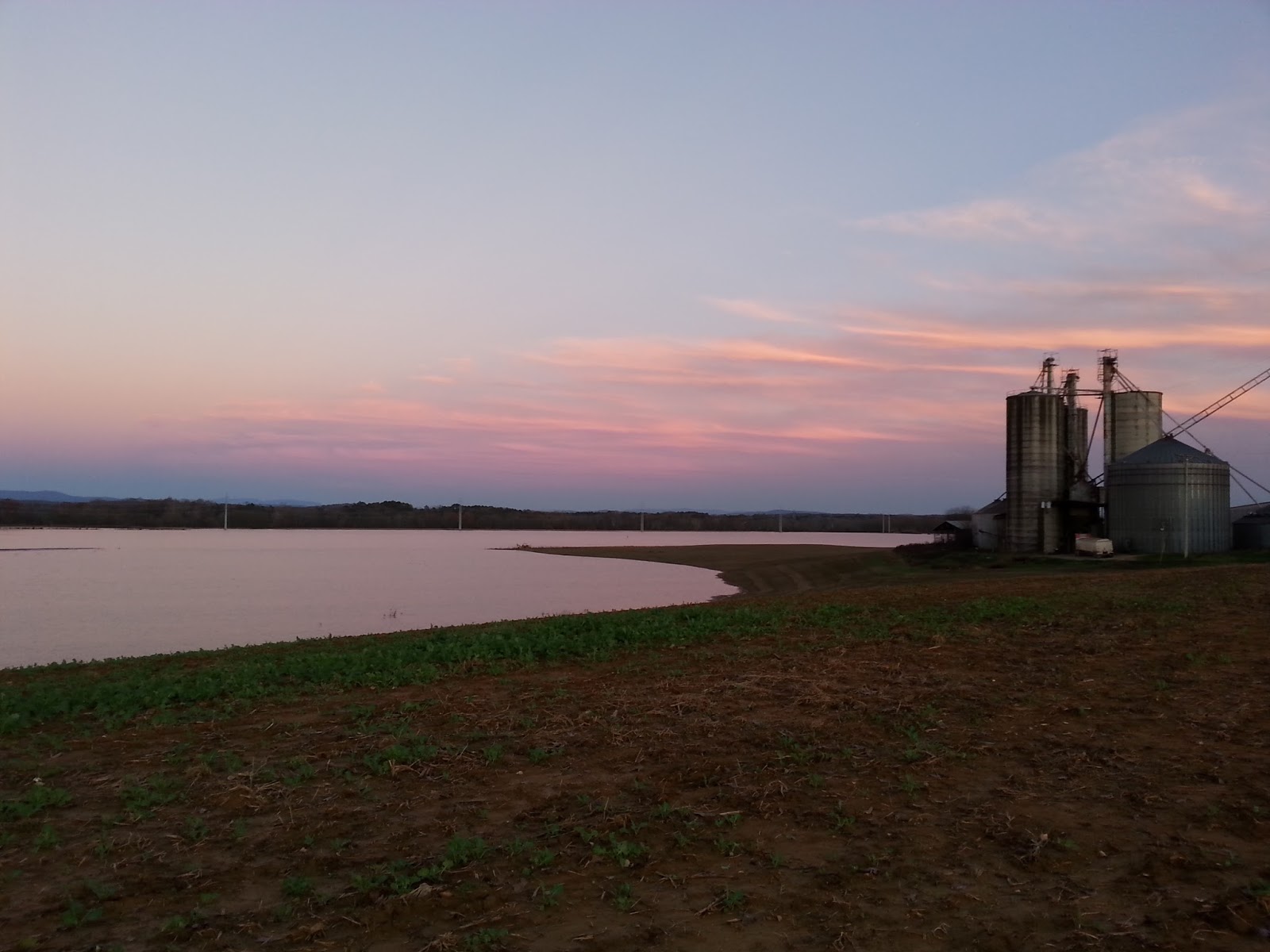
This large amount of rain resulted in flooding of local
rivers and tributaries. Gordon County was actually declared a state of
emergency by Governor Deal. One of the most significant aspects was the impact that all
the extra water had on Carters Lake. By the day of the count, the water at the
reservoir had risen to record levels. The water could not be released into the reregulation
pool until the rereg water was released into the Coosawattee River. Unfortunately for many, the water had to be released at a rate that caused post flooding even after the rain had
halted. This impacted roads, bridges and even the safety in many communities within
Gordon, Murray and Floyd Counties.

As far as impacting our survey effort, some roads were flooded and could not be traveled as they had been in the past. This was essentially a matter of inconvenience by cutting off a few miles of roadside surveying. Some properties that we typically visit
could not be surveyed thoroughly due to some portions being inaccessible.
A few of these were the Carters Lake recreation areas, the New Echota
Historic Park, some local sod farms and specifically Fite Bend.
Flooded sod farm. Joel McNeal

Fite Bend is a 1200-1300 acre bend that is bordered by two rivers. The Conasauga runs along the east side of the bend. At the southern tip, the Conasauga converges with the Coosawattee River to form the Oostanaula River, which runs along the southern and western border of Fite Bend. The property here is used for farming and the winter landcover is predominantly fields with an abundance of bare ground and crop stubble. This area floods periodically, creating a large pool of water that covers approximately half of the bend(600-800 acres). It's basically a large lake. This does shrink the amount of fields that bird surveyors can access, but in turn creates a temporary habitat that can produce results to wildlife refuge proportions. We've been hoping that an opportunity for us to survey it during one of these flooding events would arise, and this year was the year that it became a reality. This helped us establish high counts for some ducks, gulls, and Bald Eagle. If it had not been flooded our duck numbers would have suffered greatly. Due to the warmer conditions in northern regions the waterfowl had not been pushed down south in any significant numbers. Our typical sites where ducks are usually found were empty!
The possibility has been posed that all the rain and floodwaters could have displaced birds
from the circle. It is a known fact that heavy precipitation during migration can change the
behavior of migrants. Therefore, how did the recent long periods of rainfall affect our wintering birds? This is a valid question. Thankfully, the weather conditions on count day were very agreeable to surveyors with a low of 30° and a high of 49°. The wind was calm overall and zero precipitation!
Not only did our count fall on the aftermath of these afore mentioned weather events, but it
also fell on an excellent day for crane passage. After eight years of hoping, it finally took
place. The favorable tail winds sent thousands of Sandhills south. Below is a great photo
that allows one to get an idea of the overall experience.
Sandhill Cranes in flight. Amanda Ostraat


A Christmas Bird Count circle is fifteen miles in diameter. The area within is
separated into sections and assigned to teams to be covered during a 24 hour
period. The surveying effort is conducted mostly by roadside, though there are a number of agencies and private land owners who give us access to properties. Below is the
list of this year's teams in alphabetical order.
Team 1 - Carters Lake - Bill Lotz, Jess SearcyTeam 2 - Coosawattee WMA - Charlie Muise, Tracey Muise, Allan MuiseTeam 3 - Dews Pond - Chris Lambrecht, Bob BabcockTeam 4 - Fite Bend - Rebecca Byrd, Angelia Jenkins, JoAnn King, Rich Hull, Willie Malpass,
Onjulique Orsten-Malpass, Pat Markey, Toni BowenTeam 5 - Mashburn Pond - Sandy Pangle , Ted Antal, John & Karen McFarlandTeam 6 - New Echota - Johnnie Greene, Larry Stephens, Gary Cottrell, Jeff WaddlingtonTeam 7 - Nickelsville - Jim Greenway & Dawn Greenway (Duncan Beard)Team 8 - Pettiet Branch Marsh - Max Medley, George Parsley, Mark McShaneTeam 9 - Pine Chapel - Dan Vickers, Pierre HowardTeam 10 - Ranger - Justin Neal, Louise Venne, Amanda OstraatTeam 11 - Salacoa Creek - Joel McNeal, Brandy Rogers, Elizabeth RiekertTeam 12 - Sugar Creek - Joshua Spence, Derrick IngleTeam 13 - Taylortown - Stephen Stewart, Ann Stewart, Richard WhiteEarly Owling Effort - Joshua Spence, Theresa Spence (2:30am-5:00am)
Mashburn Pond team, counting cranes

Species accounts - There was a total of 105 species reported on count day this year.


annual birds marked with an asterisk ( * ):
CANADA GOOSE numbers were below average with 172 reported.*
One lone WOOD DUCK was heard along Sugar Creek by Team 12. This single bird established a new low count for this annual resident species. It is strongly suspected that this poor showing was a direct product of the flooding. This species is an inhabitant of flooded forests and there was an abundance of this habitat on count day. Plenty of inaccessible places for them to retreat.*
GADWALL, one of our annual ducks on the count, was observed in below average numbers this year, 55 in all. Team 4 & Team 9 shared most of these. *
AMERICAN WIGEONS made their fifth appearance on the count. Team 9 observed six individuals while Team 4 had a single, making this year's total 7. This is the second highest total for the count.
Ten AMERICAN BLACK DUCKS were observed at a marsh along Holly Creek by team 8. This is a new high count for this species.
Only 51 MALLARDS this time, which is below their average of 87. The majority of these were observed by Teams 5 and 8 at the Holly Creek marsh. *
NORTHERN SHOVELER set a new high count with 63 total. All but one were observed at the flooded Fite Bend fields by Team 4. The single bird was observed by Team 9.
Team 4 counted the only GREEN-WINGED TEALS of the day at the flooded Fite Bend fields. 20 birds in all, an above average number for this small duck.
REDHEADS were found in record numbers for the count. A raft of at least 125 was observed at Fite Bend. This is the third time this species has been reported on count day.
RING-NECKED DUCKS also enjoyed high numbers at 334 reported birds. Again, a large raft of at least 300 individuals was observed at Fite Bend. Team 1 recorded 33 at Carters Lake, late in the day. Team 9 had a single bird. This total beats the former record of 208 that was established the second year of the count.*
HOODED MERGANSERS were few and far between. Only four were reported! This is the second lowest showing for this species since the count's beginning. Teams 1, 2 and 4 shared these.*
RUDDY DUCK made its first count-day appearance! After being a count-week bird for a couple of years, we were finally able to make this duck an official tally on our list. This species is actually considered to be somewhat common in northwest Georgia, but for some reason can be difficult to find in this circle. We had six in all. Four reported by Team 4 at Fite Bend and two reported from Carters Lake by Team 1.
Team 9 found three NORTHERN BOBWHITE in two areas. One bird was actually calling in a cemetery. This is the fourth time this resident species has been reported on the count.
The only WILD TURKEY counted this year were a group of five observed in the Wildlife Management Area by Team 12. This is well below average, and the second lowest number ever reported for this game bird. *
A single COMMON LOON was observed at Carters Lake by Team 1.
PIED-BILLED GREBES were found in below average numbers, at 9 individuals. Teams 6 and 9 reported most of these.*
Two DOUBLE-CRESTED CORMORANTS were found this year. Teams 1 and 6 shared these. *
GREAT BLUE HERONS tied with their low count at 18 individuals. This was the number reported the first year the count was conducted. Ironically, this is actually the third time they have been reported at that number and it's averaging every fourth year. Team 1 observed the highest concentration of these at Carters Lake. *
Though 78 BLACK VULTURES is below average for this circle, it is still a strong representation of this species for this region. Team 7 reported 25 from the Nickelsville route.*
TURKEY VULTURES were found in lower than usual numbers this go-around, 147 in all, which still is a decent number.*
An average number of five NORTHERN HARRIERS were reported this year from four different sections.*
Four SHARP-SHINNED HAWKS were reported this year, which established a high count for our smallest accipiter.
Eight COOPER'S HAWKS were reported this year from seven sections, which is above average.*
Seven BALD EAGLES were observed this year, which consequently breaks our former record of three. These were shared between three teams. Team 1 observed three at Carter's Lake, Team 4 observed two at Fite Bend and Team 6 observed two on the New Echota route. It is suspected that the extensive flooding of area rivers could have contributed to attracting more eagles to the area.
Buteo numbers were above average this year. 39 RED-SHOULDERED HAWK were reported. This is only one less than their high count of 40 recorded three years ago.* RED-TAILED HAWK came in at 47.*
Team 8 found an average number of two VIRGINIA RAILS and a high count of five SORAS at the Holly Creek marsh.
Four AMERICAN COOTS were observed this year. This common species does not have a strong wintering presence in this circle. In fact, it isn't even annual on the count and these few reported this year tie for the high count. Teams 2 & 4 shared these.
In contrast to last year's low count of four SANDHILL CRANES, this year's total of 3179 was "all the rage." This does indeed establish a new high-count for this species, obliterating the old record of 384 that was established five years ago. Most birds were observed flying southeast in large waves. Cranes were reported by all thirteen teams. Team 2 counted 2360 individual birds alone. We were careful not to include flocks that could have been counted more than once by multiple teams. We did this by recording the times of observations, therefore the above total is a conservative count. Crane migration is truly a spectacle to behold. *
Cranes in flight by Louise Venne

Again, KILLDEER were observed in good numbers. 426 individuals were reported. Team 4(140) and Team 12(150) reported the largest flocks.*
WILSON SNIPE not only established a new high count for the circle, but were observed in record-breaking numbers for the state of Georgia. Team 9 flushed several large flocks from a wet roadside field. When the counting was over they had tallied a total of 502 birds!!!!! A few others were added from other sites for a total of 505!!!!!

52 total AMERICAN WOODCOCKS were reported from six sections! This trumps our old record of twenty-nine birds that was set two years ago. All these were observed at either dawn or dusk while birds were conducting their aerial courtship displays. Twenty-one were reported from the Coosawattee WMA by Team 2. The others were shared among Team 1(5), Team 4(4), Team 6(6), Team 11(5), Team 12(12).*
Gulls were observed in higher numbers than usual and both of our regular occurring species garnered high counts this year. Eight BONAPARTE'S GULLS were observed at Carters Lake by Team 1 while Team 4 found one at the flooded Fite Bend fields, making 9 in all. Similarly, Team 4 observed twelve RING-BILLED GULLS, and Team 1 counted eight for a total of 20 individuals.
There were a total of 506 ROCK PIGEONS reported from six sections. Most were found at their usual hangout near the Fite Bend silos where at least 450 were seen.*
The 2 EURASIAN COLLARED DOVES observed by Team 4 was a below-average count for this species.
MOURNING DOVES were reported in lower numbers than expected. Still, 269 is a decent count for the circle's only native dove. 150 of these were reported from Fite Bend where they often congregate to take advantage of the crop spillage.*
A single predawn BARN OWL was observed against the night's sky at Fite Bend, a long time established site for one of the most difficult resident species to find on this CBC.
EASTERN SCREECH OWLS were found in good numbers. Nine in all from three sections: Team 1(5), Team 2(3) and Team 12(1). *
Two GREAT HORNED OWLS were reported this year by Team 1 & Team 6.
A good count on BARRED OWLS, seven in all were reported from five sections. Team 2 had three of these.
An average number of 12 BELTED KINGFISHERS were observed. *
Belted Kingfisher by Amanda Ostraat

An average total of 12 RED-HEADED WOODPECKERS were reported from six teams. Team 9 had five of these on the Pine Chapel route. *
Red-headed Woodpecker by Daniel Vickers

This year's count of 82 RED-BELLIED WOODPECKERS is below average. Teams 3 and 11 had the highest concentrations of this common resident woodpecker.*
YELLOW-BELLIED SAPSUCKERS were found in average numbers this year, with a total of 27 being reported from eleven sections.*
45 DOWNY WOODPECKERS were observed this year, which is slightly below average. The highest concentration of these were found by Team 10 along the Ranger route.*
Eight HAIRY WOODPECKERS were reported from eight teams. This is slightly below average.*
NORTHERN FLICKERS were also a little below average at 51 individuals. The largest concentration(12) was reported by Team 3 on the Dews Pond route.*
PILEATED WOODPECKERS came in at an above average number of 26.*
This year's 19 AMERICAN KESTRELS was slightly below average, but widespread. These were reported from ten different sections. *
Team 9 observed one MERLIN. This is only our fourth record for this uncommon falcon.
Merlin by Pierre Howard

EASTERN PHOEBES were observed in above average numbers this year, 53 in all. Team 13 observed the highest concentration of these along the Taylortown route.*
Two LOGGERHEAD SHRIKES were observed in the circle this year. One was observed, as usual, along the Pine Chapel route by Team 9. The other was found by Team 7 on the Nickelsville route at a site where they've not been seen in years. Hopefully this species will rebound and begin to thrive in the circle. *
Team 11 found a BLUE-HEADED VIREO in the Salacoa Creek section. This is the count's fourth record.
This year's total of 391 BLUE JAYS is well above average. *
Blue Jay by Daniel Vickers

AMERICAN CROWS were reported in slightly above average numbers, at 717. The largest murders(160) being reported along the Ranger route by Team 10. *
Four FISH CROWS were reported this year from Teams 4 and 6. This is the fifth time that they've shown up on count day.
Only one lone HORNED LARK was reported from the Fite Bend fields. Surprisingly, this is only the fourth record on a count day for this species.
CAROLINA CHICKADEES were observed in slightly lower numbers than average, 154 in all. The highest concentration being reported from Team 3 along the Dews Pond route.*
TUFTED TITMICE (135) were reported in slightly above average numbers this year.*
Tufted Titmouse by Daniel Vickers

WHITE-BREASTED NUTHATCHES (31) were found in better than average numbers. *
The BROWN-HEADED NUTHATCHES (51) were observed in below average numbers. The highest concentrations of this species were found in the Coosawattee WMA by Teams 2 and 12.*
Four BROWN CREEPERS were recorded this year and these were shared between Teams 1, 6 and 11. *
We had an average number of six HOUSE WRENS, reported from five sections.
WINTER WRENS were in good numbers this year, 20 in all. These were reported from nine separate teams, most being observed in the Coosawattee WMA.*
CAROLINA WRENS were also found in above average numbers. 187 in all.*
Carolina Wren by Daniel Vickers

This year's 116 GOLDEN-CROWNED KINGLETS were above average. Team 11 reported the highest number of these from the Salacoa Creek section.*
Golden-crowned Kinglet by Daniel Vickers

RUBY-CROWNED KINGLETS were reported in lower than average numbers, 109 in all.*
This count has produced high numbers of EASTERN BLUEBIRDS, and this year's total of 371 is a great total, but not quite enough to beat the high count of 417. *
HERMIT THRUSH were found in good numbers. The 47 reported is above average.*
Good sized flocks of AMERICAN ROBINS were observed throughout the circle this year. Altogether there were 1085 reported which is above average.*
The 55 BROWN THRASHERS reported this year broke our old high count record by 18 individuals! The highest number of these came from Team 4 at Fite Bend.*
NORTHERN MOCKINGBIRDS (115) were found in slightly above average numbers this go-around.*
1,490 EUROPEAN STARLINGS were reported.*
Team 4 and Team 11 observed the only AMERICAN PIPITS for the day. This year's total of 42 is slightly below average.*
CEDAR WAXWINGS came in with a total of 265, which is also slightly below average for this circle.*
Members of Team 4 observed a single LAPLAND LONGSPUR at the Fite Bend fields. This is the fourth time that this species has made an appearance on count-day. The data over the years is beginning to suggest and possibly confirm that this site is most likely annual wintering grounds for this rare winter visitor.
Two ORANGE-CROWNED WARBLERS were reported this year. Teams 2 and 9 shared these. This is only the second time that this species has been found on the count.
A decent count of 15 PALM WARBLERS were reported from three sections. Teams 1, 4 and 9. Interestingly, two teams observed Eastern form individuals, which are uncommon here.*
Palm Warbler by Daniel Vickers

PINE WARBLERS had the same exact number reported as last year....18, which is slightly above average.*
The YELLOW-RUMPED WARBLER total this year was below average, 70 in all. This is our third lowest since the count's inception, but actually more than I expected as this species has been noticeably scarce this season. The highest concentration was along the Ranger route.*
The following eleven species of Emberizidae were observed on the count with a total of 2,206 individuals:
The 710 CHIPPING SPARROWS reported is the second highest count for this species. Teams 1, 2 and 11 reported totals in the triple digits.*
FIELD SPARROWS were found in good numbers, 170 in all.*
A total of 88 FOX SPARROWS were reported from eight separate teams. Sixty individuals were found by Team 2 in the Coosawattee WMA. Team 12 reported 15 from another section of the WMA. This smashed last year's high count by 27 birds! This could possibly be a new high count for the state as well.
DARK-EYED JUNCO numbers were above average at 131. Most of these were reported by Team 5 on the Mashburn Pond route.*
You know there's a thriving winter population of WHITE-CROWNED SPARROWS returning annually to the count's circle when their total of 43 is below average! In fact, this is the third lowest total reported! Teams 1 and 9 observed a few of these, but the bulk(35) were reported from Fite Bend by Team 4. *
This year's 275 WHITE-THROATED SPARROWS were well below their average of 335.*
Ten VESPER SPARROWS were tallied for the count. This is the first time in six years that this species has reached double-digits. These were shared by Teams 4 and 11.*
Vesper Sparrow by Willie Malpass

The SAVANNAH SPARROW number was just slightly above average this year, coming in at 182 individuals.*
SONG SPARROW (331) numbers were slightly below average.*
SWAMP SPARROW (76) were observed in below average numbers, producing their third lowest total since the count's beginning.*
EASTERN TOWHEES were reported in good numbers, 190 in all. Well above average. Team 3 reported the highest concentration of these.*
The 534 NORTHERN CARDINALS observed this year completely destroyed the former high count of 433!!! This high number is most likely a product of more teams in the field.*
Team 1 observed a rare wintering INDIGO BUNTING along a marsh's edge in the White Graves section. This is one of only a handful of winter records from the state. It is only the second known record from northwest Georgia, the first being a bird found on the Dalton Christmas Bird Count on December 26, 1966. A nice surprise to top off a great day of counting birds.
RED-WINGED BLACKBIRDS were observed in slightly higher numbers than usual at 2096. Team 5 observed at least 1200 coming out of one of the wetlands along Holly Creek.*
EASTERN MEADOWLARK (162) numbers were below average.*
Team 4 found the only RUSTY BLACKBIRDS (60) for this year's count at Fite Bend.
Team 9 found the largest flock of COMMON GRACKLES with a conservative estimate of 10,000. A few other teams observed some for a final total of 10,168. Even though this is a fair showing, our average for this circle is 27,243!*
BROWN-HEADED COWBIRDS came in at 55 this year.
The 16 HOUSE FINCHES that were reported were below average.*
Teams 1 and 11 found the day's only PINE SISKINS, five in all.
There was only one PURPLE FINCH reported this year. Team 2.
AMERICAN GOLDFINCHES were in fewer numbers than usual. 114 in all which is only six more than the all time low of 108!*
43 HOUSE SPARROWS were counted.*
There was a good effort to supplement our results by scouting and follow-up teams this
year. In fact, six species were reported during count-week. Count-week is defined as
three days prior and three days after the actual count day. During these six days,
species that were not observed on count day can be reported to the NAS as present
within the circle. Species reported:
Canvasback
Greater Scaup
Lesser Scaup
Bufflehead
Horned Grebe
Least Sandpiper
The Carter's Lake CBC is located in the ridge & valley province of north GA. The fifteen mile diameter circle covers portions of southern Murray County and northeastern Gordon County.
The Christmas Bird Count is a winter bird survey that stands as the longest running wildlife census. It is conducted by volunteers. The National Audubon Society has promoted the census for decades. The society and others use the data to determine the health of wild bird populations.
For more information:


